Showing posts with label exhibitions. Show all posts
Showing posts with label exhibitions. Show all posts
Thursday, 22 December 2016
My latest article: The Second Empire
My thirtieth and last article of 2016 is about the Second Empire, i.e. the reign of Emperor Napoléon III of the French from 1852 to 1870. Like the Emperor himself, the Empire was full of paradoxes, and it turned out to be the last time France was a monarchy. The article appears in the January 2017 issue of Majesty (Vol. 38, No. 1), which is on sale in Britain from today and in other countries within two weeks, while an excellent exhibition on the splendours of the Second Empire can be seen at the Musée d'Orsay in Paris until 15 January.

Monday, 16 June 2014
After 850 years, a female archbishop of Sweden
The King and Queen of Sweden, accompanied by Crown Princess Victoria, were present in Uppsala Cathedral on Sunday for the installation of Antje Jackelén as Archbishop, the first female Archbishop in Swedish history.
Jackelén, who has until now been Bishop of Lund and was elected Archbishop last autumn, succeeds Anders Wejryd, who has held the archiepiscopate for eight years and performed his last official duty when he baptised Princess Leonore last Sunday.
Jackelén becomes Archbishop of Sweden in the year that that office celebrates the 850th anniversary of its founding by Pope Alexander III. Among the events to mark this jubilee is the exhibition "Himlen är här" ("Heaven is here"), which is held in Uppsala Cathedral this summer. Among the items exhibited is, interestingly, St Erik's crown, which has been removed from the late king's shrine while his bones undergo various tests. This is therefore a unique opportunity to see the only medieval royal crown that has been preserved in Scandinavia.
Jackelén, who has until now been Bishop of Lund and was elected Archbishop last autumn, succeeds Anders Wejryd, who has held the archiepiscopate for eight years and performed his last official duty when he baptised Princess Leonore last Sunday.
Jackelén becomes Archbishop of Sweden in the year that that office celebrates the 850th anniversary of its founding by Pope Alexander III. Among the events to mark this jubilee is the exhibition "Himlen är här" ("Heaven is here"), which is held in Uppsala Cathedral this summer. Among the items exhibited is, interestingly, St Erik's crown, which has been removed from the late king's shrine while his bones undergo various tests. This is therefore a unique opportunity to see the only medieval royal crown that has been preserved in Scandinavia.
Wednesday, 5 June 2013
Last royal jubilee exhibition opened
I have just returned from Trondheim, where I on Monday attended the opening of the last of the six jubilee exhibitions based on the Royal Collections which are the government’s present to the King and Queen for their 75th birthdays. The exhibition was opened by the Minister of Culture, Hadia Tajik, in the presence of the King and Queen.
The exhibition in Trondheim shows royal vehicles from the years 1905-1945. The pièce de résistance is the coronation coach made for the coronation of King Haakon VII and Queen Maud in Trondheim in 1906 (the King refused to continue the tradition of walking to the Cathedral). In addition to several other carriages the exhibition includes King Haakon’s first car, a Belgian Minerva from 1913; a Baby Cadillac presented to Crown Prince Olav by his grandmother, Queen Alexandra of Britain, in 1912; a Lincoln used during the escape from the invading Germans in 1940; and a Buick in which King Haakon and Crown Princess Märtha made their triumphant entry into Oslo on 7 June 1945, following the liberation, and which was also used by King Olav for his consecration in 1958 and by King Harald and Queen Sonja for their consecration in 1991.
The exhibition, titled “Fra berliner til Buick - Kongelige kjøretøyer 1905-1945” may be seen at Dora Kulturbunker until 29 September.
Following the exhibition opening and the subsequent dinner at Ringve Manor the King and Queen embarked on their annual county tour, which this year will take them to several municipalites in Sør-Trøndelag. It was a beautiful sight to watch, from the balcony of the Rockheim museum, how the Royal Yacht Norge late on Monday night slowly sailed away on the Trondheim fjord with the light blue sky and the pink clouds as backdrop.
The exhibition in Trondheim shows royal vehicles from the years 1905-1945. The pièce de résistance is the coronation coach made for the coronation of King Haakon VII and Queen Maud in Trondheim in 1906 (the King refused to continue the tradition of walking to the Cathedral). In addition to several other carriages the exhibition includes King Haakon’s first car, a Belgian Minerva from 1913; a Baby Cadillac presented to Crown Prince Olav by his grandmother, Queen Alexandra of Britain, in 1912; a Lincoln used during the escape from the invading Germans in 1940; and a Buick in which King Haakon and Crown Princess Märtha made their triumphant entry into Oslo on 7 June 1945, following the liberation, and which was also used by King Olav for his consecration in 1958 and by King Harald and Queen Sonja for their consecration in 1991.
The exhibition, titled “Fra berliner til Buick - Kongelige kjøretøyer 1905-1945” may be seen at Dora Kulturbunker until 29 September.
Following the exhibition opening and the subsequent dinner at Ringve Manor the King and Queen embarked on their annual county tour, which this year will take them to several municipalites in Sør-Trøndelag. It was a beautiful sight to watch, from the balcony of the Rockheim museum, how the Royal Yacht Norge late on Monday night slowly sailed away on the Trondheim fjord with the light blue sky and the pink clouds as backdrop.
Wednesday, 6 February 2013
Another royal jubilee exhibition opens
For the past two days I have been in Tromsø, far to the north of Norway, where I attended the opening of yet another of the jubilee exhibitions based on the Royal Collections which are the government’s present to the King and Queen for their 75th birthdays last year. The exhibition was opened by the Minister of Culture, Hadia Tajik, in the presence of the Queen.
There are altogether six different exhibitions shown in different parts of the country and the one at Nordnorsk Kunstmuseum in Tromsø shows the art collection which was presented to King Oscar II and Queen Sophie by public subscription on the occasion of their silver wedding anniversary in 1882. The collection includes works by, among others, Fritz Thaulow, Hans Gude, Christian Krohg, Harriet Backer, Adelsteen Normann and Otto Sinding and is a rather splendid example of the high standards of Norwegian art of the late nineteenth century. With one exception, the paintings are all normally at the Royal Palace, most of them in rooms which are not accessible during the summer openings, meaning that this is a unique chance to see these artworks.
The majority of the artworks show Norwegian landscapes and coastal motifs, thus reflecting that King Oscar II travelled more widely in Norway than any monarch since Christian IV. Thus there is also a small exhibition dedicated to Oscar II’s travels in Northern Norway in an adjacent room.
The exhibition lasts until 1 September.
The last of the royal jubilee exhibitions will open in Trondheim on 4 June.
There are altogether six different exhibitions shown in different parts of the country and the one at Nordnorsk Kunstmuseum in Tromsø shows the art collection which was presented to King Oscar II and Queen Sophie by public subscription on the occasion of their silver wedding anniversary in 1882. The collection includes works by, among others, Fritz Thaulow, Hans Gude, Christian Krohg, Harriet Backer, Adelsteen Normann and Otto Sinding and is a rather splendid example of the high standards of Norwegian art of the late nineteenth century. With one exception, the paintings are all normally at the Royal Palace, most of them in rooms which are not accessible during the summer openings, meaning that this is a unique chance to see these artworks.
The majority of the artworks show Norwegian landscapes and coastal motifs, thus reflecting that King Oscar II travelled more widely in Norway than any monarch since Christian IV. Thus there is also a small exhibition dedicated to Oscar II’s travels in Northern Norway in an adjacent room.
The exhibition lasts until 1 September.
The last of the royal jubilee exhibitions will open in Trondheim on 4 June.
Friday, 21 September 2012
King attends opening of another royal jubilee exhibition - and appoints new ministers
Today I have been to Elverum to attend the opening of the exhibition “The Longest Journey, 1940-1945” at the Glomdal Museum. The exhibition is one of the six exhibitions based on the Royal Collection which are the government’s 75th birthday present to the King and Queen. The King attended, wearing mourning for his sister, Princess Ragnhild, who died on Sunday.
“The Longest Journey, 1940-1945” is a travelling exhibition which deals with the royal family’s flight, exile and homecoming. Elverum seemed a natural starting point as this small town, some two hours north of Oslo, was the second stop on the royal family’s and government’s flight and it was there that King Haakon on 10 April 1940 refused the German demand that he should appoint a government led by the leader of the Norwegian Nazi party, Vidkun Quisling. (Most of the town was consequently flattened by German bombers).
The exhibition will later be shown at Ørlandet, Ålesund, Bodø, Tromsø, Alta, Hammerfest, Harstad, Lista and Stord before ending up at the Defence Museum in Oslo in 2014.
The exhibition was supposed to be opened by Culture Minister Anniken Huitfeldt, but a cabinet reshuffle meant that she was no longer Culture Minister by the time the exhibition opened. Instead the task of declaring it open fell to Rigmor Aasrud, Minister of Government Administration, Reform and Church Affairs.
The reshuffle was formalised in a State Council at the Royal Palace at 11 a.m. The King appointed Hadia Tajik, a 29-year-old MP from Rogaland, who is considered as a rising star of the Labour Party, Minister of Culture. Jonas Gahr Støre, who had been Foreign Minister for seven years, was moved to the Ministry of Health and Care Services and was succeeded by Espen Barth Eide, until now Minister of Defence. Støre replacesAnne-Grete Strøm-Erichsen, who returns to the Ministry of Defence, where she also preceded Mr Eide. The outgoing Minister of Culture, Anniken Huitfeldt, took on the portfolio of Labour, until now held by Hanne Bjurstrøm, who left the government today.
“The Longest Journey, 1940-1945” is a travelling exhibition which deals with the royal family’s flight, exile and homecoming. Elverum seemed a natural starting point as this small town, some two hours north of Oslo, was the second stop on the royal family’s and government’s flight and it was there that King Haakon on 10 April 1940 refused the German demand that he should appoint a government led by the leader of the Norwegian Nazi party, Vidkun Quisling. (Most of the town was consequently flattened by German bombers).
The exhibition will later be shown at Ørlandet, Ålesund, Bodø, Tromsø, Alta, Hammerfest, Harstad, Lista and Stord before ending up at the Defence Museum in Oslo in 2014.
The exhibition was supposed to be opened by Culture Minister Anniken Huitfeldt, but a cabinet reshuffle meant that she was no longer Culture Minister by the time the exhibition opened. Instead the task of declaring it open fell to Rigmor Aasrud, Minister of Government Administration, Reform and Church Affairs.
The reshuffle was formalised in a State Council at the Royal Palace at 11 a.m. The King appointed Hadia Tajik, a 29-year-old MP from Rogaland, who is considered as a rising star of the Labour Party, Minister of Culture. Jonas Gahr Støre, who had been Foreign Minister for seven years, was moved to the Ministry of Health and Care Services and was succeeded by Espen Barth Eide, until now Minister of Defence. Støre replacesAnne-Grete Strøm-Erichsen, who returns to the Ministry of Defence, where she also preceded Mr Eide. The outgoing Minister of Culture, Anniken Huitfeldt, took on the portfolio of Labour, until now held by Hanne Bjurstrøm, who left the government today.
Friday, 14 September 2012
Royal jewels: Queen Desideria’s malachite parure


 Today the Nordic Museum in Stockholm opens a new exhibition showing some 1,000 items of jewellery from the museum’s vast collection. Among the highlights is a neoclassical parure of gold and malachite which has belonged to Queen Sophia of Sweden and of Norway.
 The parure consists of a tiara, a necklace, a large brooch, a pair of earrings (one of them damaged) and two bracelets. The tiara is 5 centimetres high and 19 centimetres long, while the necklace measures 44.5 centimetres.
Gold of four nuances surround the cameos carved in malachite with classical scenes after the great Danish sculptor Bertel Thorvaldsen. The central cameo of the tiara shows “day”; the brooch depicts “night”. In the necklace are cameos showing Aiskylos and Hygieia, Hercules and Hebe.
The tiara bears the mark “SP” and the French assay mark 1819-1839, which has made it possible to establish that it was created by the jeweller Simon Petiteau (1782-ca. 1860) in Paris, probably in the 1820s or 1830s.
It has been suggested that the parure may have belonged to Queen Desideria of Sweden and of Norway, and a look at the inventory of her jewels drawn up after her death in December 1860s proves that this is indeed the case. The parure is also listed in the jewellery inventory of her daughter-in-law Queen Josephina following her death in 1876 and then in the inventory after Queen Sophia’s death in 1913.
Apparently none of the heirs of Queen Sophia wanted this parure, which may have seemed very out of date by 1913, and it was decided to donate it to the Nordic Museum. Queen Sophia also owned a similar parure of gold and lava which had also belonged to Queen Desideria and is now the property of Queen Sophia’s great-great-granddaughter, Désirée af Rosenborg, who was given it by her grandmother, Princess Margaretha of Denmark, on her coming of age.
There is also a similar parure, of malachite and pearls, which may have belonged to Empress Joséphine of the French, in the possession of the Fondation Napoléon.
No definite closing date has been set for the exhibition at the Nordic Museum, but it is expected to last at least until May. Read more about the exhibition here (external link). All photos are press photos by Mats Landin, copyright the Nordic Museum.
Monday, 10 September 2012
New books: Jubilee diamonds

While Roberts’s volume is the definite account, de Guitaut’s book aims at a more general audience. While Roberts’s book gives the detailed history of 74 items of jewellery, there are only 22 included in this book, but the selection is varied and representative of many different sort of diamonds, types of jewellery and historical epochs. The items included in de Guitaut’s book are those which are also included in the exhibition.
de Guitaut’s book also includes some items from the diamond exhibition which are not included in Roberts’s book, most of them not Queen Elizabeth’s personal property: Queen Victoria’s small diamond crown, Queen Alexandra’s coronation fan, a snuff box once belonging to King Friedrich II of Prussia and two jewelled swords.
It opens with a short general introduction to the history of diamonds and their association with the English/British royal family. Like Roberts’s book it is well illustrated, both with close-ups of the jewels and photos of them being used. However, there are some mistakes in the captions which appear unnecessary: Lord Snowdon is certainly not 119 years old, although a caption says he is born in 1893; the King of Norway’s name is not Harold, but Harald; and a photo of Queen Mary wearing the tiara and necklace made for the Dehli Durbar in 1911 cannot possibly show her “as Princess of Wales” in 1910, as the jewellery had not yet been created by then.
Caroline de Guitaut’s book can well be read on its own as an introduction to the British royal diamonds, but also as a useful supplement to Roberts’s larger book.
Sunday, 8 July 2012
What to see: Queen Maud’s coronation gown


The exhibition of treasures from the Royal Collection at the Museum of Decorative Arts and Design in Oslo, which is one of six exhibitions based on the Royal Collection the government has presented to the King and Queen on the occasion on their 75th birthdays, has so far attracted more than 40,000 visitors. One of the highlights of the exhibition, which is on until 26 August, is the gown worn by Queen Maud for her coronation in Trondhjem Cathedral (now Nidaros Cathedral) on 22 June 1906.
The coronation dress is of gold lame, apparently hand-woven in Lyons, with scalloped lace sleeves (said to be lace inherited by Queen Maud) and richly embroidered in gilt metal thread, gold-coloured sequins, artificial pearls and diamante.
It is a joint venture by Vernon of London and Silkehuset of Kristiania (now Oslo), but we do not know how these two fashion houses divided the work. However, Anne Kjellberg of the Museum of Decorative Arts and Design has reached the conclusion that it seems as if the dress was sewn in London and embroidered in Kristiania. However, some accounts disagree with this, including one contemporary newspaper account which said that the dress had been sewn by Silkehuset and embroidered in Paris.
The gown is in the so-called “princess style”. In its décolletage it is perhaps possible to detect a hint of medieval to go along with the architecture of the great Nidaros Cathedral, which in those years was undergoing a major rebuilding and whose newly restored interior was taken into use in its entirety for the first time for the coronation.
Unlike the coronation gowns of her two predecessors, Queen Louise and Queen Sophie, which were decorated with the Norwegian heraldic lion, Queen Maud’s gown is entirely devoid of national symbols. One may argue that the dissolution of the personal union with Sweden had made the use of such national symbols superfluous. This may seem paradoxical at first, but the Bernadottes, who were kings and queens of two independent kingdoms but resided primarily in one of them, obviously used every opportunity to stress their Norwegian identity. For the new dynasty, which was exclusively Norwegian, this was not as necessary.
Queen Maud’s coronation dress also shows a clear influence from that worn by her mother, Queen Alexandra of Britain, for hers and Edward VII’s coronation in 1902. Queen Alexandra had taken advantage of the fact that theirs was the first British coronation in 64 years to wear a fashionable Parisian dress more in keeping with her own taste rather than with traditional requirements. Queen Alexandra is said to have brushed aside objections by, somewhat irrationally, insisting that she knew more about fashion than anyone else.
Following the death of King Olav V in 1991, the wardrobe of his mother was donated to the Museum of Decorative Arts and Design (now part of the National Museum), where Queen Maud’s coronation gown was first exhibited in 1994. Since then it has also been exhibited in London, Trondheim and Monaco.
Sunday, 19 February 2012
What to see: Treasures from the Royal Collection, Oslo


This first exhibition is titled “Royal Journeys 1905-2005” and shows items from the Royal Collection related to various forms of journeys undertaken by the members of the present dynasty since its establishment in 1905, which at the same times reflects the wide range of the Royal Collection.
The exhibition is divided into four rooms, of which the museum’s great hall is dedicated to coronations and consecrations and the journeys across the country undertaken in connection with these ceremonies. The pièce de résistance of this room is the magnificent coronation coach made for the coronation of King Haakon VII and Queen Maud in 1906 and not seen in public since 1940. In this room one will also find Queen Maud’s spectacular coronation gown together with the dresses worn by Princess Astrid and Queen Sonja for the consecrations of 1958 and 1991, as well as the uniforms worn by King Haakon, King Olav and King Harald for the ceremonies in 1906, 1958 and 1991.
One room is dedicated to King Haakon and Queen Maud, and includes a mountain of luggage symbolising the fifty suitcases with which Queen Maud travelled. Here are also the young Princess Maud’s sketchbook and photographs made during her first visit to her future kingdom in 1893, items related to the royal election of 1905 and the new King and Queen’s departure from Denmark and arrival in Norway along with uniforms, dresses, orders and gifts from their state visit, all illustrated throughout with photos and video footage.
The next room focuses on King Olav and Crown Princess Märtha, but also includes World War II. Particularly dominant in this room are the sumptuous gifts King Olav received on state visits to exotic countries such as Iran and Thailand. The final room deals with the current King and Queen and the journeys they have undertaken within and without Norway since their accession 21 years ago.
The photos above show some of the many diverse items included in this exhibition. The first photo shows the coronation coach, followed by Queen Maud’s coronation gown and Ida Lorentzen’s painting of the consecration of King Harald and Queen Sonja.
The fourth picture shows the Grand Cross of the Russian Order of St Catherine, set with diamonds, which was given to the then Princess Maud of Britain on the occasion of her cousin Grand Duchess Xenia of Russia’s wedding in 1894. The fifth photo is of a gold casket given to King Haakon and Queen Maud by the Corporation of the City of London during their state visit to Britain in 1906.
The sixth photo shows an electrical Cadillac which Crown Prince Olav was given by his doting grandmother, Queen Alexandra of Britain. Next is Per Palle Storm’s bust of Crown Princess Märtha, followed by her miniature medals and family orders.
The ninth picture shows the blanket and pillow used by King Haakon during the campaign of 1940. Then comes presents given to King Olav during a Thai state visit, a detail of the royal table set for the return dinner during the official visit to Denmark in 2005 and finally a bust given to the King and Queen by Nelson Mandela on his last visit to Norway that same year.
Thursday, 16 February 2012
King and Queen receive exhibition present


Prime Minister Jens Stoltenberg paid tribute to the King and Queen in a speech which brought tear to the eyes of the Queen, the Crown Princess and Princess Märtha Louise, and the King and Queen thereafter made a joint acceptance speech before they were shown around in the first exhibition.
Later in the day, this first exhibition, titled “A Royal Journey” and showing treasures from the Royal Collection, was formally opened by the Culture Minister, Anniken Huitfeldt. From today the exhibition is open to the public (until 26 August). I will return with a more detailed presentation of the exhibition later.
Wednesday, 15 February 2012
New books: The Norwegian Royal Collection

As I am co-author of the book I shall obviously refrain from reviewing it and restrict myself to a presentation of it. The main themes of the six jubilee exhibitions are royal journeys and royal gifts, and this also puts its mark on the related book.
The book starts which a foreword by Prime Minister Jens Stoltenberg, followed by an interview with the King and Queen about the Royal Collection (by journalist Ulf Andenæs of Aftenposten) and a short introduction by King Haakon’s and Queen Maud’s biographer Tor Bomann-Larsen.
The art historian Ingeborg Lønning, who is head of the Royal Collection, then presents the collection in all its diversity over some 75 pages. Thereafter the historian Trond Norén Isaksen (yes, that is me) charts the history of royal journeys: journeys by Dano-Norwegian monarchs and Swedish-Norwegian union kings to Norway before 1905, major royal tours of Norway for the past 200 years and their significance, and the history and development of foreign visits and in particular state visits. The art historian Nina Høye looks at the aesthetics of royal travelling, including suitcases, celebratory pavilions and arches, means of travel and more.
Thereafter I return with a chapter on the symbolically most important journey, “The Road to Nidaros Cathedral”, i.e. the coronation cathedral. In this chapter I look at the nineteenth century coronation processions in Trondheim and why King Haakon VII in 1906 refused to continue this tradition and instead ordered the coronation coach (which has not been used since 1940, but has now been restored and will be the pièce de résistance of two of the jubilee exhibitions).
Bjørn K. Høie follows this up with a chapter on the royal stables (its carriages, its horses and its personnel) in the years 1905-1940, and Sven Gj. Gjeruldsen thereafter presents a century of royal cars. The King’s authorised biographer Per Egil Hegge writes about the most difficult journey, i.e. Crown Princess Märtha’s and her children’s journey into exile in 1940, but also the triumphant homecoming in 1945.
Thereafter the focus shifts to major presents to the royal family. The art historian Knut Ljøgodt presents the collection of contemporary art which was a gift to King Oscar II and Queen Sophie for their silver wedding anniversary in 1882 and which may be said to form the backbone of the royal art collection. The art historian Widar Halén deals with the sumptuous silver objects which were presented to Queen Maud on hers and King Haakon’s arrival in Norway in 1905, her birthday the following day and their coronation in 1906, among them also the coronation presents from the English and Scottish peoples. The art historian Knut Ormhaug follows this with a presentation of the paintings given to King Haakon and Queen Maud on those same occasions.
Finally, the photographer Jan Haug presents a selection from the Palace’s large photo collections, spanning the years 1857-1964. The book is neither a photo book nor purely a coffee table book, but it is lavishly illustrated. There are many new photos of the objects from the Royal Collection, but also a wide range of historical photographs, most of them from the Royal Collection and some of them never published before.
Here is a panorama of the coronation procession of King Oscar II and Queen Sophie, photographed from the roof of Nidaros Cathedral in 1873; King Haakon VII and several other gentlemen inspecting the engine of a new car in 1934; private snapshots of King Haakon and Queen Maud both before and after their arrival in Norway; King Haakon at play with his son; the distance elegance of Queen Maud; King Haakon and King Edward VII of Britain having sat down for a rest during a walk in the woods in 1908; photos taken by Princess Maud of Britain in 1893 when on a visit to the country which unbeknown to her would one day be hers; the 21-year-old seamstress Miss Sonja Haraldsen modelling her own creations a year before she met her prince; and much more.
The book is in Norwegian, but has English summaries.
Wednesday, 11 January 2012
New portrait of Queen Margrethe and her heirs

The Queen is shown in the Great Hall of Christian IX’s Mansion at Amalienborg, wearing the emerald parure which is part of the Danish crown jewels and the collar of the Order of the Elephant. This is the fourth time Niels Strøbek has painted the Queen since her accession.
The portrait will be part of the exhibition, which runs until 22 April, and then join the permanent collections of the museum, which is also Denmark’s national portrait gallery.
Later this year another family portrait will be completed, this time by Thomas Kluge and showing the Queen and Prince Consort with their sons, daughters-in-law and all their grandchildren. This painting will be a private gift to the Queen and hang at Fredensborg Palace, but will go on public display before being taken to Fredensborg.
Monday, 2 January 2012
Norway’s royal collection goes on display across the country

The book will consist of an interview with the King and Queen (by Ulf Andenæs) and a wide range of chapters on topics from history and art history relating to the monarchy. The contributing authors are Tor Bomann-Larsen, Per Egil Hegge, Nina Høye, Ingeborg Anna Lønning, Knut Ljøgodt, Widar Halén, Bjørn Høie, Knut Ormhaug, Jan Haug, Sven Gj. Gjeruldsen and myself. My two chapters deal with the history of royal travels and with the coronation coach of 1906, the previous coronation processions and why the traditional coronation procession was replaced by a cortege in 1906.
Each of the exhibitions will have one theme. The first of them, to be held in Oslo, deals with royal travels and will show, among other things, presents, travel equipment, dresses, uniforms, jewellery, orders and - the pièce de résistance - the newly renovated coronation coach. This exhibition will be opened by the King on 15 February and be open to the public from 16 February to 26 August this year. (The King’s 75th birthday falls on 21 February, but there will be no public celebrations on that date as the King will not be at home. However, his and the Queen’s birthdays will be celebrated on 31 May).
The second exhibition, which will be held in Bergen from 24 May to 2 September, will show gifts from the people to King Haakon and Queen Maud after their arrival in Norway in 1905 and for their coronation in 1906. The exhibition in Trondheim will open in June 2013 and focus on royal vehicles (here the coronation coach will again be on display), while the exhibition in Tromsø, also to be held in 2013, will show the magnificent collection of artworks which was the people’s present to King Oscar II and Queen Sophie for their silver wedding anniversary in 1882 and which they donated to the state when they were deposed in 1905. In addition there will be a travelling exhibition going to smaller towns which will focus on World War II and the royal family’s exile, and a travelling exhibition of photos from the royal collections which will be sent to schools all over the country.
The exhibitions also have a website, which was officially launched today: http://www.denkongeligereise.no/no/
Sunday, 27 November 2011
New books: Royal splendour from across Europe
On the occasion of the wedding of Sovereign Prince Albert II and Princess Charlène of Monaco this summer the Grimaldi Forum in Monaco held an exhibition titled no less than “Magnificence and Grandeur of the Royal Houses in Europe”. I did not see the exhibition, but a while ago I got hold of the eponymous catalogue, edited by Catherine Arminjon, which bears testimony to a sumptuous exhibition of royal treasures from across Europe.
The catalogue is arranged geographically, starting with Portugal and Spain before moving north to France, Britain, Luxembourg, Belgium, the Netherlands, Denmark, Norway and Sweden and then south again from Russia via Poland, Prussia, Saxony, Bavaria, Austria, the Hungarian Esterházys, the Savoys of Turin and the Bourbons of Naples before ending up in Monaco.
Thus Liechtenstein is the only of the current European monarchies not included in the exhibition, which is a pity given that the princely collection is one of the grandest in Europe, probably second only to that of Britain. The British Royal Collection has also not lent anything to the exhibition, so the British section is made up of loans from mostly French collections (a bust from the Victoria & Albert Museum is the only British-owned item included).
But the other extant monarchies have all lent items from their royal collections – some more generously than others. Being Norwegian I notice that the loans from this country are actually quite impressive, even including Queen Maud’s coronation gown.
Covering all this in one exhibition or one volume would obviously be impossible and the solution chosen is to focus on one monarch (or couple) per country – Denmark and Prussia being the exceptions by including respectively both Christian IV and Christian IX and the entire Hohenzollern dynasty from Friedrich I to Friedrich Wilhelm IV. The chosen person(s) is often, but not always, the founder of a dynasty – Felipe V of Spain, Adolphe of Luxembourg, Léopold I of the Belgians, Haakon VII of Norway.
For each country there is one main essay, generally followed by one or two shorter and more specific texts and finally a catalogue of the items relating to the country in question. The essays are diverse in their contents, with some authors choosing to write short biographical essays while authors set focus on one topic in particular.
As is the case with all anthologies, some essays are obviously more successful than others. Among the better ones one could mention Philippe Maarschalkerweerd on the education of Queen Wilhelmina of the Netherlands, Andrea Merlotti on the achievements of King Vittorio Amadeo of Sardinia and Sicily, Gustaf Janssens on King Léopold I of the Belgians’s brand of constitutional monarchy, Peter Kristiansen on King Christian IV of Denmark-Norway, Magnus Olausson on the public persona of King Gustaf III of Sweden and Lorenz Seelig on the artistic patronage of King Ludwig I of Bavaria.
The only main essay which does not measure up is, unfortunately I must say, the Norwegian one, which has been written by Widar Halén, director of design and decorative art at the National Museum in Oslo. It seems obvious that Halén has very little knowledge and understanding of the topic he has been asked to write about and has done little about this.
His essay is, bewilderedly, entitled “The new Norwegian monarchy and its context”, and from the text it seems clear that he does indeed think that there was an entirely new Norwegian monarchy in 1905. Thus he refers to “King Oscar II of Sweden” as if Norway had been a Swedish province rather than an independent kingdom in a personal union with its eastern neighbour. He also claims that independence came only in 1905 and that the monogram of Haakon VII “was soon being brandished as a symbol of freedom, particularly during World War II”. In fact this happened only during World War II. It seems obvious that Halén has understood little of what really happened in 1905.
He adds some nonsense about the mediaeval book The King’s Mirror saying that “to serve and honor the king is to pay homage to God”. If this “is seen simply as a description of the king’s immunity and exceptional status, its significance for modern Norway is more readily understood. It was on this basis ten that the Norwegian people chose Prince Carl of Denmark and Princess Maud, daughter of King Edward VII and Queen Alexandra of Great Britain, as king and queen of Norway”. Reading this, one can but wonder what on earth he is talking about.
To these examples of his own confusion he adds several factual mistakes, such as the claim that Queen Maud died at Appleton House, that the accession of a new monarch was proclaimed from the palace balcony in 1958 (sic) as well as in 1991 or that the Constitution of 17 May 1814 irrevocably abolished the nobility. Using Snorre Sturlason’s Heimskringla as a historical source is highly questionable, to put it mildly.
If asked to write an essay on a topic about which one knows little, one can either decline, or try to learn something about it in order to make the best out of it, or put one’s own confusion into print. Sadly the Norwegian essay of this catalogue is an example of the latter option.
There are inevitably some mistakes to be found also in other parts of the catalogue and the English language is sometimes flawed. Occasionally there is a quaint expression, sometimes a sentence does not make sense, but I am left wondering whether this is due to the translators or a result of the various authors with varying command of the language having been required to write in English.
The catalogue is beautifully designed and having read it, the main impression is that it makes for an interesting grand tour through the history of Europe’s monarchies, taking in some of the most interesting stories to be found along the way and giving an impression of the splendour associated with the royal courts of Europe in recent centuries.
The catalogue is arranged geographically, starting with Portugal and Spain before moving north to France, Britain, Luxembourg, Belgium, the Netherlands, Denmark, Norway and Sweden and then south again from Russia via Poland, Prussia, Saxony, Bavaria, Austria, the Hungarian Esterházys, the Savoys of Turin and the Bourbons of Naples before ending up in Monaco.
Thus Liechtenstein is the only of the current European monarchies not included in the exhibition, which is a pity given that the princely collection is one of the grandest in Europe, probably second only to that of Britain. The British Royal Collection has also not lent anything to the exhibition, so the British section is made up of loans from mostly French collections (a bust from the Victoria & Albert Museum is the only British-owned item included).
But the other extant monarchies have all lent items from their royal collections – some more generously than others. Being Norwegian I notice that the loans from this country are actually quite impressive, even including Queen Maud’s coronation gown.
Covering all this in one exhibition or one volume would obviously be impossible and the solution chosen is to focus on one monarch (or couple) per country – Denmark and Prussia being the exceptions by including respectively both Christian IV and Christian IX and the entire Hohenzollern dynasty from Friedrich I to Friedrich Wilhelm IV. The chosen person(s) is often, but not always, the founder of a dynasty – Felipe V of Spain, Adolphe of Luxembourg, Léopold I of the Belgians, Haakon VII of Norway.
For each country there is one main essay, generally followed by one or two shorter and more specific texts and finally a catalogue of the items relating to the country in question. The essays are diverse in their contents, with some authors choosing to write short biographical essays while authors set focus on one topic in particular.
As is the case with all anthologies, some essays are obviously more successful than others. Among the better ones one could mention Philippe Maarschalkerweerd on the education of Queen Wilhelmina of the Netherlands, Andrea Merlotti on the achievements of King Vittorio Amadeo of Sardinia and Sicily, Gustaf Janssens on King Léopold I of the Belgians’s brand of constitutional monarchy, Peter Kristiansen on King Christian IV of Denmark-Norway, Magnus Olausson on the public persona of King Gustaf III of Sweden and Lorenz Seelig on the artistic patronage of King Ludwig I of Bavaria.
The only main essay which does not measure up is, unfortunately I must say, the Norwegian one, which has been written by Widar Halén, director of design and decorative art at the National Museum in Oslo. It seems obvious that Halén has very little knowledge and understanding of the topic he has been asked to write about and has done little about this.
His essay is, bewilderedly, entitled “The new Norwegian monarchy and its context”, and from the text it seems clear that he does indeed think that there was an entirely new Norwegian monarchy in 1905. Thus he refers to “King Oscar II of Sweden” as if Norway had been a Swedish province rather than an independent kingdom in a personal union with its eastern neighbour. He also claims that independence came only in 1905 and that the monogram of Haakon VII “was soon being brandished as a symbol of freedom, particularly during World War II”. In fact this happened only during World War II. It seems obvious that Halén has understood little of what really happened in 1905.
He adds some nonsense about the mediaeval book The King’s Mirror saying that “to serve and honor the king is to pay homage to God”. If this “is seen simply as a description of the king’s immunity and exceptional status, its significance for modern Norway is more readily understood. It was on this basis ten that the Norwegian people chose Prince Carl of Denmark and Princess Maud, daughter of King Edward VII and Queen Alexandra of Great Britain, as king and queen of Norway”. Reading this, one can but wonder what on earth he is talking about.
To these examples of his own confusion he adds several factual mistakes, such as the claim that Queen Maud died at Appleton House, that the accession of a new monarch was proclaimed from the palace balcony in 1958 (sic) as well as in 1991 or that the Constitution of 17 May 1814 irrevocably abolished the nobility. Using Snorre Sturlason’s Heimskringla as a historical source is highly questionable, to put it mildly.
If asked to write an essay on a topic about which one knows little, one can either decline, or try to learn something about it in order to make the best out of it, or put one’s own confusion into print. Sadly the Norwegian essay of this catalogue is an example of the latter option.
There are inevitably some mistakes to be found also in other parts of the catalogue and the English language is sometimes flawed. Occasionally there is a quaint expression, sometimes a sentence does not make sense, but I am left wondering whether this is due to the translators or a result of the various authors with varying command of the language having been required to write in English.
The catalogue is beautifully designed and having read it, the main impression is that it makes for an interesting grand tour through the history of Europe’s monarchies, taking in some of the most interesting stories to be found along the way and giving an impression of the splendour associated with the royal courts of Europe in recent centuries.
Saturday, 25 June 2011
The Queen to exhibit own works of art to fund scholarship for young artists
 In an interview with Fædrelandsvennen (also published in Aftenposten today) the Queen announces that her own works of art will be exhibited for the first time. The Queen says that she has long wanted to establish a scholarship for young artists, but has not had the funds needed to do so. In cooperation with the artists Kjell Nupen and Ørnulf Opdahl she is currently working on transforming photos from a journey to Svalbard in 2006 into graphic prints and a series of 24 of them, titled “Tre reiser, tre landskap” (“Three journeys, three landscapes”) will be exhibited at Dunkers kulturhus in Helsingborg this autumn and at Henie Onstad Art Centre in Bærum outside Oslo next summer.
 There will be fifty copies of the series, each consisting of a portfolio containing eight prints by the Queen, eight by Nupen and eight by Opdahl, and the proceeds from the sale will in its entirety go towards the new foundation “Her Majesty Queen Sonja’s Scholarship for Artists”, which every second year will award a scholarship to a young graphic artist from one of the Nordic countries. Most of the fifty portfolios have already been sold, assuring the foundation of a capital stock of more than 5 million NOK. The first scholarship will be awarded on 14 June 2012 in connection with the opening of the exhibition at Henie Onstad Art Centre.
The Queen, whose passion for contemporary art goes a long way back, has a significant private art collection, which was exhibited at Henie Onstad when the King and Queen moved from Skaugum to the Royal Palace in the summer of 2001. On the occasion of the Queen’s 75th birthday next summer Henie Onstad will also host another exhibition with works from her private collection.
Thursday, 13 January 2011
People from the past: Iver Winfeldt Buch, Norwegian court jeweller in St Petersburg
 This week is the last chance to see the Norwegian National Museum’s exhibition “Sacral Treasures from the Kremlin Museums in Moscow”, which blends the Norwegian museum’s unusual collection of Russian icons with loans from the Kremlin, such as further icons, priestly vestments and precious items used during the liturgy in the imperial cathedrals.
While the many Swedes who left their mark on St Petersburg are fairly well-known, this exhibition reminds us of one the less well-known Norwegians who were also active in the capital of imperial Russia.
Included in the exhibition are two items made by the court jeweller Iver Winfeldt Buch (1749-1811). The picture above (a press photo copyright of the National Museum of Art, Architecture and Design) shows one of them, a golden chalice set with 435 diamonds and three gems showing the birth of Jesus, the baptism of Jesus and the removal of the Virgin Mary’s house to Loreto – possibly from Ekaterina II’s own collection of gems. The chalice was commissioned by the Empress in 1795 and presented to the Monastery of St Sergey.
Iver Winfeldt Buch was born in Drammen in 1749. He came to St Petersburg in 1770 and was received into the guild of foreign gold and silver smiths in 1776. According to a family legend related by his relative Ada Polak, a renowned Norwegian art historian who died in London last autumn at the age of 96, Buch first worked for a court jeweller who was exiled to Siberia after he had exchanged one of the largest diamonds in an imperial tiara with an imitation while he was repairing it.
Buch is said to have taken over his workshop and eventually came to own one of the largest such stores in the Russian capital. He was appointed court jeweller to Ekaterina II and later to Pavel I.
Prince Potemkin was also among his customers and following Potemkin’s death Empress Ekaterina II presented the Monastery of St Alexander in St Petersburg with another jewelled chalice by Buch in commemoration of the Prince. In addition to liturgical items he is known to have made jewellery, silver furniture and chandeliers for the imperial palaces.
He was appointed consul for Denmark-Norway in St Petersburg and visited Norway again in 1804. He died in 1811, supposedly in poverty, having spent his fortune on his passion for long journeys.
NPG to mark diamond jubilee with exhibition
With Queen Elizabeth II of Britain due to mark the 59th anniversary of her accession to the throne in a few weeks, plans for the diamond jubilee next year are beginning to take shape. Among the more interesting events will be the exhibition “The Queen: Art and Image” (external link), featuring sixty different portraits of the monarch.
The exhibition will be shown at the National Gallery Complex in Edinburgh from 25 June to 18 September this year, at the Ulster Museum in Belfast from 14 October 2011 to 15 January 2012, at the National Museum in Cardiff from 4 February to 29 April 2012 and at the National Portrait Gallery in London from 17 May to 21 October 2012.
The exhibition will be shown at the National Gallery Complex in Edinburgh from 25 June to 18 September this year, at the Ulster Museum in Belfast from 14 October 2011 to 15 January 2012, at the National Museum in Cardiff from 4 February to 29 April 2012 and at the National Portrait Gallery in London from 17 May to 21 October 2012.
Wednesday, 15 December 2010
What to see: Queen Ingrid centenary exhibition, Copenhagen
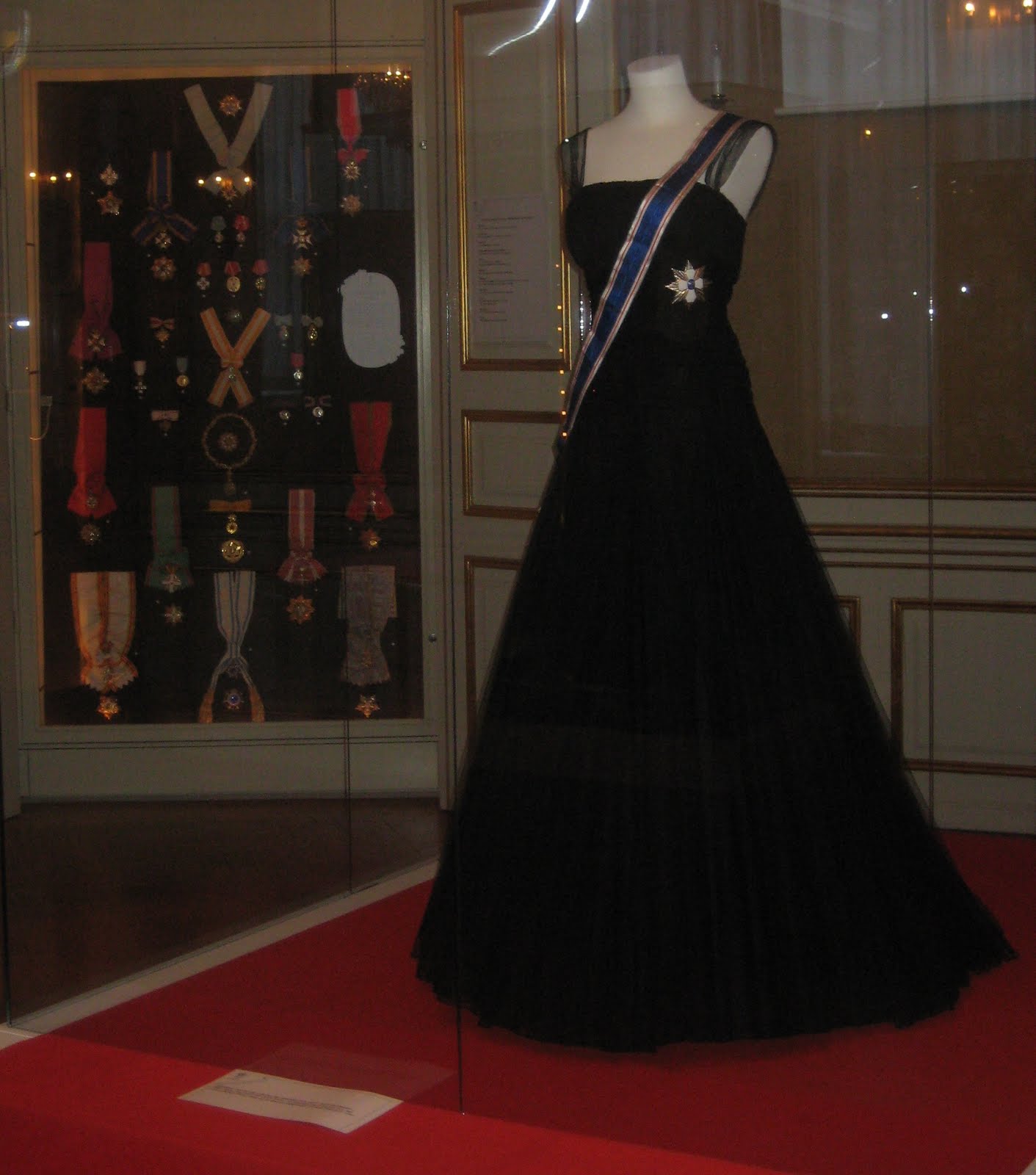


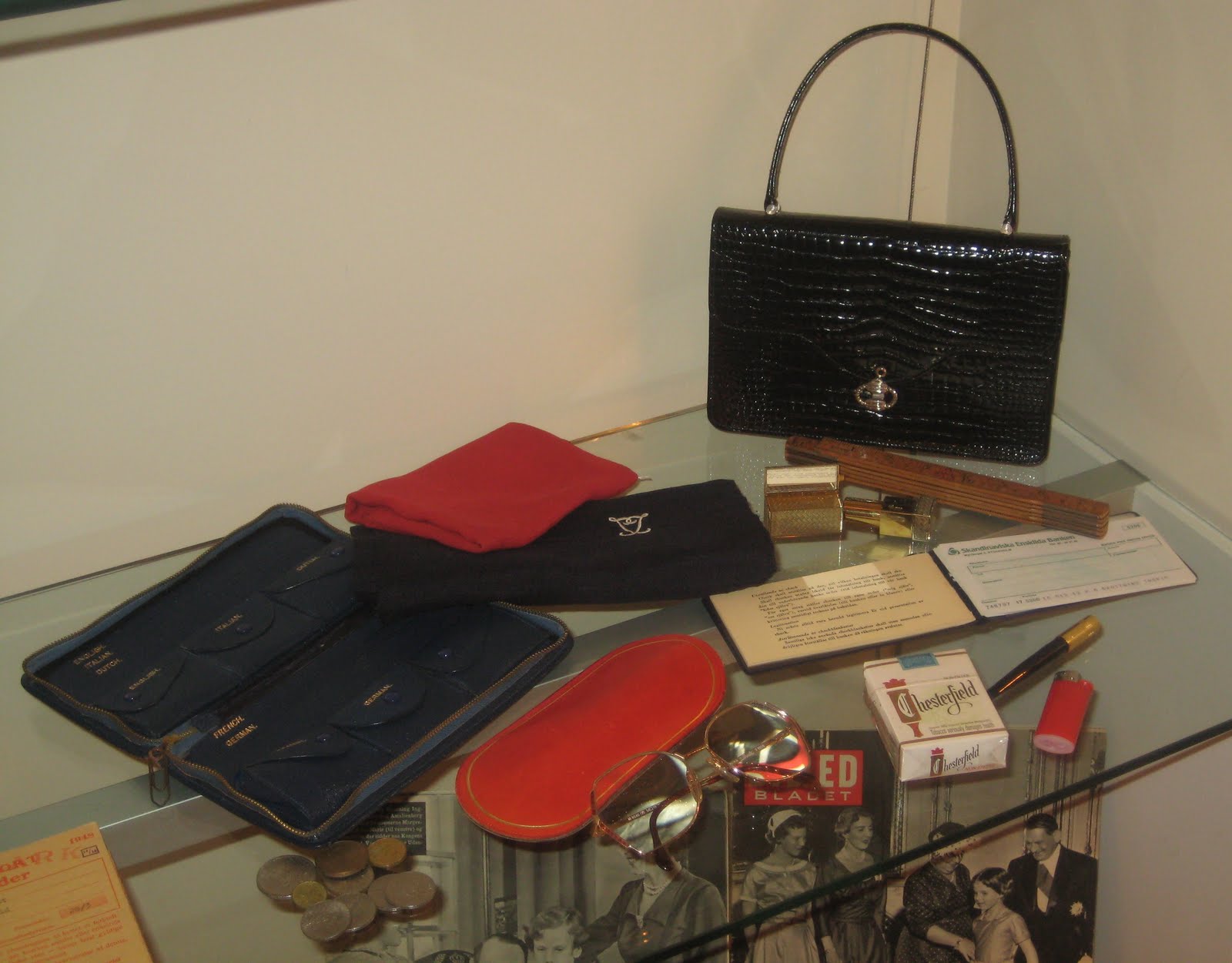


 Last week I was in Copenhagen, where the Amalienborg Museum is currently, somewhat belatedly, showing an exhibition on Queen Ingrid on the occasion of her centenary. Following Queen Ingrid’s death ten years ago her three daughters donated many of her belongings to De Danske Kongers Kronologiske Samling (the Royal Collection), whose department at Amalienborg has since then held several exhibitions on various aspects of Queen Ingrid’s life.
 This centenary exhibition is in many ways a summary of those earlier exhibitions and unlike them it covers the whole length of her 90-year-long life. A whole life in one exhibition might have led to an incomplete or a cramped result, but in my opinions the curators have succeeded quite well in being selective while at the same time covering the most important aspects of Queen Ingrid’s life and work.
Some of them are however not easy to present in an exhibition – one such example is her role as a moderniser, perhaps her most important contribution to the history of the Danish monarchy – but that does not mean that these topics are passed over.
Among the items on display are a number of Queen Ingrid’s clothes, such as her wedding dress (fourth photo), her silver wedding dress (sixth photo) and a black dress (first photo) she wore for an Icelandic state visit in 1954, just days after the death of Crown Princess Märtha. The dress is thus adorned with the Grand Cross of the Icelandic Order of the Falcon, while Queen Ingrid’s other foreign decorations are displayed in the same room.
Those Danes who might have wondered what was in the Queen’s handbag will get the answer at this exhibition (fifth photo), where one can also see a number of embroidered handbags and other items, some of them embroidered by Queen Ingrid herself (seventh photo).
A selection of her toys (eighth photo) reminds us of the first carefree ten years of her life before the death of her mother, a tragedy she never really got over. The white shawl glimpsed behind the dolls covered Crown Princess Margareta on the evening before her death.
Also on display are Franciska Clausen’s 1980 portrait of Queen Ingrid (second photo), which belongs to the Self-Owning Institution People’s Home in Aabenraa, and the oath signed by Queen Ingrid when she was sworn in to serve as Guardian of the Realm in 1972 (third photo), making her the only person outside the line of succession so far to be accorded this honour.
The exhibition in Christian VIII’s Mansion closes on the 101st anniversary of Queen Ingrid’s birth on 28 March. It is accompanied by a catalogue in the form of a 52-page booklet which includes essays by Knud J. V. Jespersen, Inge Adriansen and Ove Hornby. While Jespersen, the official court historian, gives an overview of Queen Ingrid’s life, Adriansen deals with Queen Ingrid’s relationship with Southern Jutland, while Hornby looks at Queen Ingrid’s importance for the Danish Institute in Rome. The latter two chapters were both originally given as lectures on 28 March this year.
Sunday, 12 December 2010
The Royal Collection to go on tour
 As I mentioned half a year ago there are plans for a royal museum in Oslo, where parts of the Royal Collection can go on public display. Today parts of it are of course in use at the Royal Palace and other royal residences, but most of the 400,000 items are in storage. There is now support across party lines for such a museum and the process which will hopefully lead to the establishment of such a museum is thus underway.
In the meantime the government has decided that its present to the King and Queen on their 75th birthdays in 2012 will be to grant 30 million NOK for temporary exhibitions of the royal collection. 10 million is earmarked for the main exhibition in Oslo, while another 10 million will be spent on regional exhibitions and the final 10 million on a travelling exhibition which will take items from the collection on tour across the country between 2012 and 2014.
The institution which was known as Riksutstillinger (“National Exhibitions”) and which arranged travelling art exhibitions is now part of the National Museum of Art, Architecture and Design and over the weekend the Minister of Culture, Anniken Huitfeldt, will instruct the National Museum to start working on the planning and projecting of the exhibitions.
Tuesday, 28 September 2010
Several exhibitions on royal history this autumn
 I have just returned from Stockholm, where the National Museum was busy getting everything in place for their grand exhibition “Härskarkonst – Napoleon, Karl Johan, Alexander” (“Staging Power – Napoleon, Karl Johan, Alexander”), which will be opened by King Carl Gustaf tomorrow in the presence of former French President Valéry Giscard d'Estaing.
The exhibition is expected to be the highlight of the Bernadotte bicentenary and will look at Emperor Napoléon I of France’s, King Carl XIV Johan of Sweden and Norway’s and Emperor Alexander I of Russia’s relations to art and how they used the arts to strengthen their own positions. More than 400 works of art – paintings, costumes, jewellery, furniture and more – are included in this exhibition.
Some examples worth mentioning are Jacques-Louis David’s iconic painting of Napoléon crossing the Alps, a leaf from the golden wreath with which Napoléon crowned himself emperor and the magnificent emerald necklace which was given to Stéphanie de Beauharnais when she married the future Grand Duke of Baden in 1805.
A richly illustrated catalogue, in Swedish and English versions, is available from the National Museum from this week. The exhibition will last until 23 January and will thereafter be shown in a modified version at the State Hermitage in St Petersburg.
The National Museum’s exhibition of Bernadotte portraits, “Bernadotter i svart och vitt” (“The Bernadottes in Black and White”), which opened in June, also remains open until 23 January, but on the coming Sunday some of the exhibited photos will be replaced with others (for preservation reasons).
It was earlier reported that the Royal Collection would show an exhibition on Carl XIV Johan’s family life at the Royal Palace in Stockholm from 1 October, but this has been postponed to 2 December.
There will however be several other exhibitions related to royal history to be seen this autumn. The Queen’s Gallery at Buckingham Palace has just extended their magnificent “Victoria & Albert: Art & Love”, which was due to close on 31 October, to 5 December.
As earlier mentioned the Museum of National History at Frederiksborg Palace in Copenhagen will stage an exhibition to mark the 350th anniversary of the introduction of absolute monarchy in Denmark-Norway, while Rosenborg Palace in Copenhagen will hold the exhibition “Pomp og pragt - Kongemagt og enevælde” (“Pomp and Splendour - Royal Power and Absolute Monarchy”) on the same topic. The exhibition at Frederiksborg will run from 16 October to 20 February, while Rosenborg’s lasts from 16 October to 27 February.
A book related to these two exhibitions has also just been published by Gads Forlag of Copenhagen. Magt og pragt – Enevælde 1660-1848 is written by the noted historians Thomas Lyngby, Søren Mentz and Sebastian Olden-Jørgensen.
On the coming Saturday the Amalienborg Museum in Copenhagen will inaugurate their new exhibition “Den elegante fornyer” (“The Elegant Reformer”), which is a belated commemoration of the centenary of Queen Ingrid’s birth in March. This exhibition will close on the late Queen’s birthday, 28 March 2011. The Danish Royal Collection has by the way just got a new website (external link), which is a significant improvement on the old one.
In Antwerp one will soon be able to see the exhibition “Voor eer en glorie - Napoleon en de juwelen van het Keizerrijk” (“For Honour and Glory - Napoleon and the Empire’s Jewels”) at the Diamond Museum in Queen Astrid Square. This exhibition on the jewellery of the Napoleonic age will be open from 1 October to 31 December.
Here in Oslo the exhibition “Slottet og Linstow – Den nye hovedstadens grunnstein” (“The Palace and Linstow – The Cornerstone of the New Capital”) at the National Museum’s architecture department is now in its closing days. The exhibition, which is the first since 1922 to be devoted to Hans D. F. Linstow, the city planner and architect of the Royal Palace, will close on 10 October.
Meanwhile another branch of the National Museum, the National Gallery, last week opened “Sakrale skatter fra Kreml-museene i Moskva” (“Sacral Treasures from the Kremlin Museums in Moscow”), which shows some 90 icons, textiles and ritual and liturgical objects used in the imperial cathedrals of Russia. This is said to be the most valuable exhibition ever held at the National Museum. It will stay open until 16 January.
The photo show Grand Duchess Stéphanie Napoléon’s emerald necklace, which is normally kept in the Victoria and Albert Museum in London. The press photo is copyright the Victoria and Albert Museum.
Subscribe to:
Posts (Atom)


